

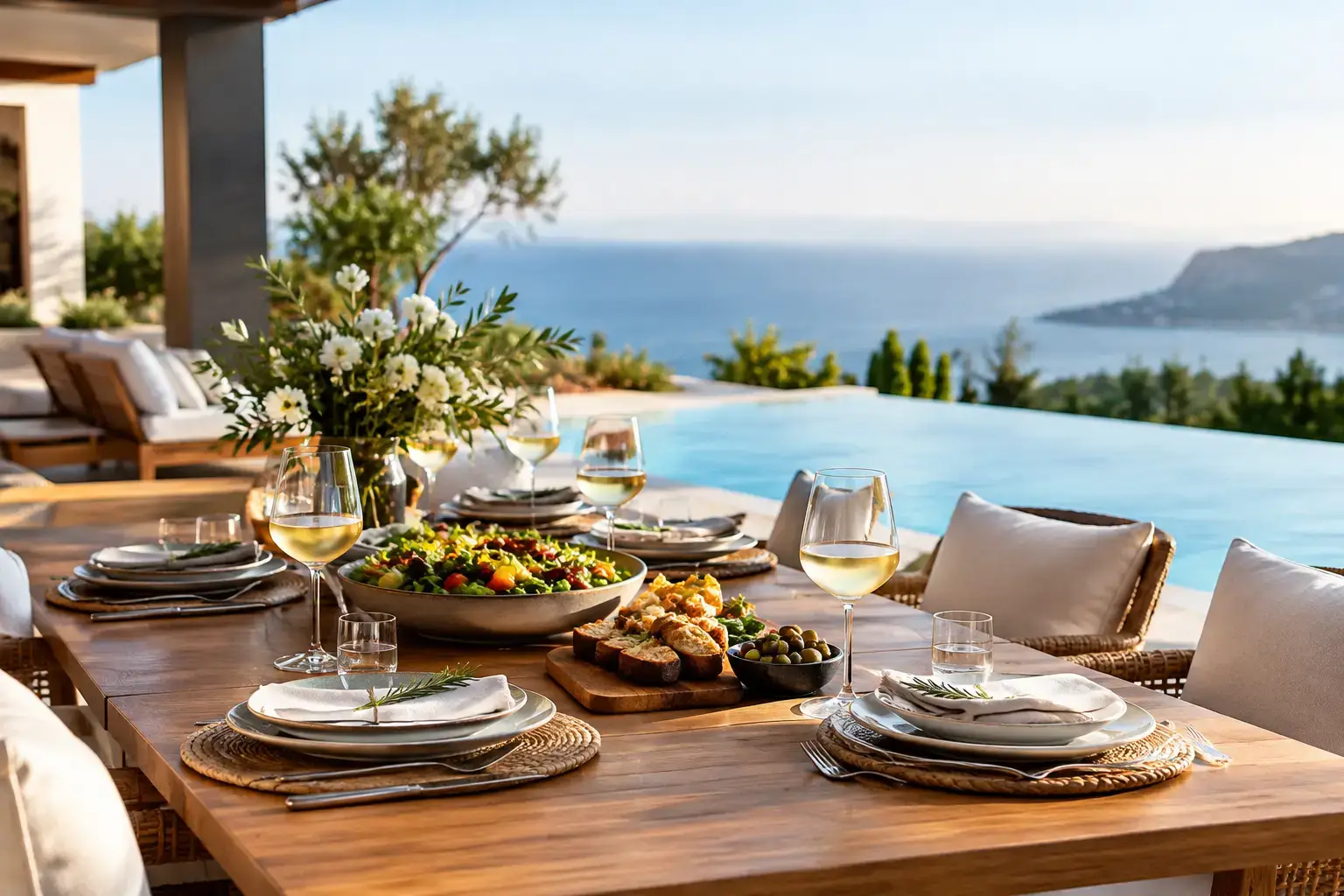
A villa meal should never feel like a restaurant reservation you have to keep. It should follow the day: a quiet coffee before the beach, fruit by the pool, a long lunch when the sun is high, and dinner when the sky begins to soften. Knowing how to plan villa dining means creating that sense of ease before you arrive, while leaving enough room for appetite, weather, and spontaneity.
At a private coastal stay, food becomes part of the setting. The sea view, the warm evening air, the pleasure of gathering around a table without watching the clock – these details matter as much as the menu itself. A little advance thought allows every meal to feel considered, never over-scheduled.
Begin with the rhythm of your stay
Rather than planning every breakfast, lunch, and dinner, decide what you want each day to feel like. A three-night escape may call for one chef-led evening, one relaxed meal made in the villa kitchen, and one dinner in the village. A week-long stay offers more room for a slower culinary rhythm: market mornings, poolside lunches, simple aperitifs, and one or two memorable occasions around the table.
Start with your arrival day. After travel, most guests want something welcoming but uncomplicated. Arrange a few essentials in advance, such as chilled water, local wine, coffee, seasonal fruit, yogurt, bread, and a few savory snacks. If your arrival is late, consider a prepared dinner or a simple menu that can be served with little effort. The first evening should feel like an exhale.
Then consider the days you expect to spend close to home. A villa with a pool, sea views, and an inviting outdoor dining space naturally encourages unhurried meals. Keep those days lightly planned. On excursion days, reserve energy for a special dinner afterward or choose something easy to assemble.
Choose the right balance of chef service and self-catering
The most enjoyable villa dining plans combine independence with a little thoughtful support. A private chef can turn one evening into an occasion, especially for a birthday, anniversary, family gathering, or the first full night of a group stay. It is a chance to linger over a menu shaped around your preferences while someone else handles the preparation and the kitchen afterward.
That does not mean every meal needs to be formally catered. Self-catering has its own pleasures, particularly in Crete, where excellent ingredients ask for very little. Ripe tomatoes, olive oil, fresh herbs, local cheese, grilled fish, stone fruit, and warm bread can create a beautiful table without complicated cooking.
The choice depends on the group. Couples may prefer a chef dinner followed by easy breakfasts and market lunches. Families often appreciate stocked provisions and a few dependable dishes that suit different appetites. Friends traveling together may enjoy sharing the cooking across one or two evenings, while reserving chef service for the night everyone wants to dress up and stay late at the table.
At Kaliva Residence, the fully equipped kitchen makes it easy to keep that balance. You can enjoy the privacy of cooking at your own pace, then add a more elevated dining moment when the occasion calls for it.
Build menus around the Cretan table
The best villa menus do not need to be elaborate. They need to feel generous, fresh, and suited to the climate. In the warmer months, plan for meals that can be prepared ahead, served at room temperature, or finished quickly on the grill or stovetop.
For breakfast, think beyond a heavy sit-down meal. Greek yogurt with honey and walnuts, eggs, fresh fruit, pastries, strong coffee, and juice create a relaxed start. Add a few familiar favorites if children are traveling, but let the local ingredients set the tone.
Lunch is often best kept light. A large salad with tomatoes, cucumber, herbs, olives, and feta can sit beside grilled vegetables, flatbread, or fish. Keep cold sparkling water, fruit, and a simple dessert close at hand for long pool afternoons. If you are serving lunch outside, choose dishes that can tolerate a little warmth and do not require last-minute attention.
Dinner is where you can be more intentional. One evening might be centered on grilled seafood and seasonal greens. Another might bring a chef-designed Cretan menu with several small dishes to share, followed by local wine and a dessert that feels celebratory but not heavy. Plan one meal around a favorite ingredient or family tradition, especially if you are marking a special occasion.
Account for preferences before you arrive
Ask everyone in your party about dietary needs and strong dislikes before deciding on a chef menu or grocery order. This is not only a practical step. It means no one has to explain their needs at the table after the meal is already underway.
Vegetarian, vegan, gluten-free, and child-friendly options are easiest to accommodate with notice. It is also helpful to distinguish between a true allergy and a preference, particularly when arranging a chef service. A concise note with each guest’s needs will make menu planning clearer and more relaxed for everyone.
Shop with intention, not excess
Overbuying is one of the easiest ways to make villa dining feel less luxurious. A crowded refrigerator and too many ambitious ingredients create pressure to cook. Plan a first grocery shop for approximately two days, then enjoy a market visit once you have settled into the pace of the stay.
For a group of up to six, focus on versatile ingredients that work across several meals. Eggs, greens, tomatoes, fruit, bread, cheese, olives, herbs, sparkling water, and a few proteins will take you far. Include provisions for aperitifs, too: something salty, something fresh, and a bottle or two you are genuinely looking forward to opening.
A market visit can become one of the quiet pleasures of the holiday. Go in the morning, choose what looks best, and let that guide the evening meal. A local recipe book in the villa can offer inspiration, but there is no need to treat it as an assignment. The point is to enjoy the ingredients, not perfect a performance.
Set the table for the setting
Villa dining is as much about atmosphere as food. Before sunset, take ten minutes to clear the table, chill the wine, put on a low playlist, and bring out a few candles or small lamps. A simple linen napkin or bowl of citrus can be enough. The intention should be visible, but never fussy.
Think about the timing of outdoor meals. In summer, lunch may be more comfortable in shade, while dinner becomes especially beautiful as the temperature cools. If there is a breeze from the sea, choose serving dishes and glassware that feel secure, and keep lighter napkins tucked beneath plates.
For a chef dinner, decide in advance whether you want the evening to feel polished or informal. Both can be special. A dressed table with a multi-course meal suits a celebration. Shared platters and bare feet after a swim may suit the group better. The most elegant choice is the one that feels natural.
Leave room for the unexpected
A well-planned villa dining experience has structure, but it should not become a schedule. You may find a taverna you want to revisit, stay longer at the beach than expected, or decide that cheese, fruit, and wine on the terrace are all you need for dinner. That is not a change of plan. It is the freedom you came for.
Plan one standout meal, stock the villa with beautiful basics, and keep one evening entirely open. When the light is right and everyone is relaxed, the simplest dinner can become the one you remember most.