

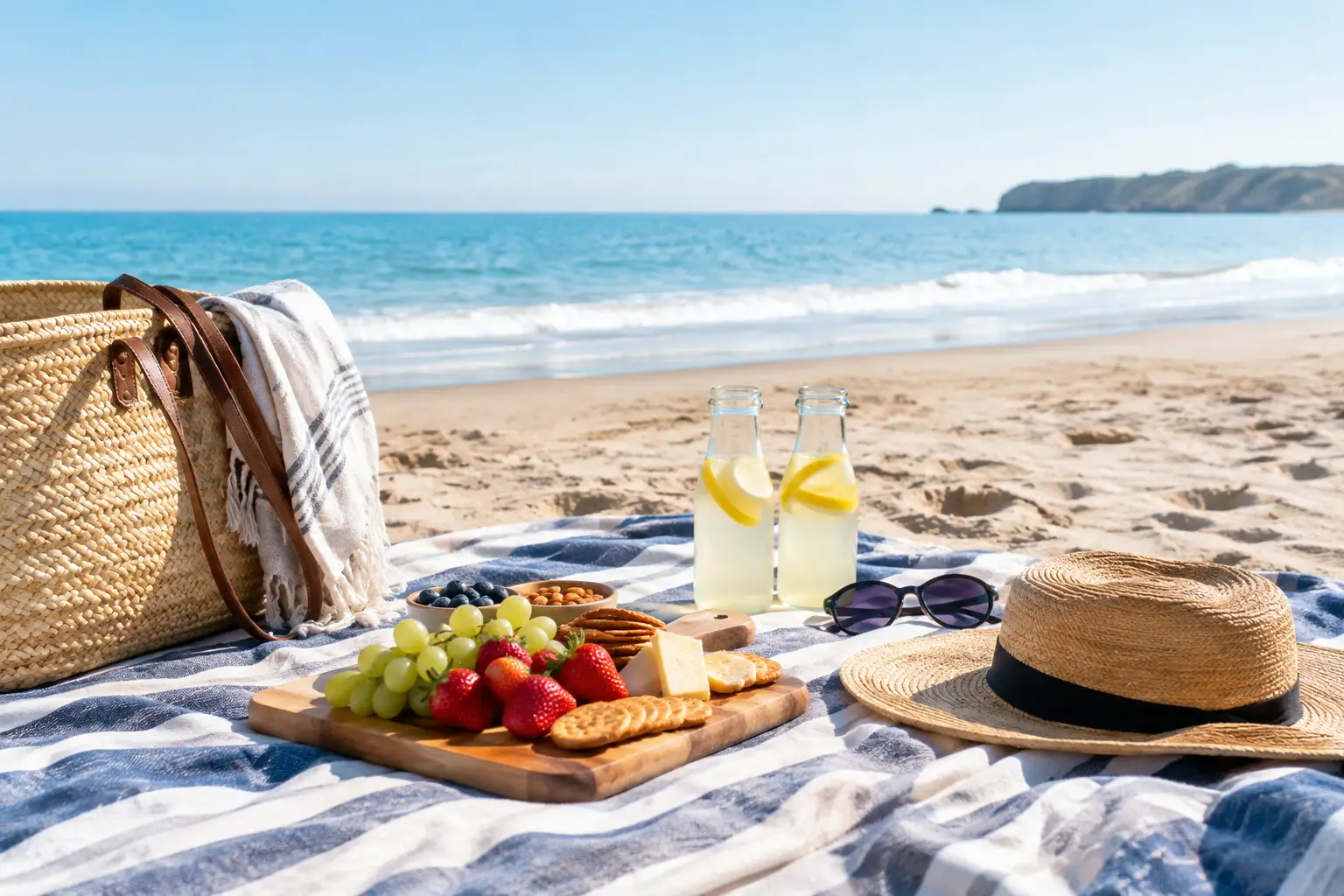
A beach picnic should feel effortless once you reach the sand. That is the quiet art behind how to create a beach picnic worth remembering: choose a beautiful setting, bring food that travels well, and leave enough room for the day to unfold slowly.
On Crete’s northern coast, the best picnics are not overproduced. They are composed with care – cool fruit, warm bread, a view of clear water, and the kind of shade that invites you to stay for another hour. Whether you are planning a relaxed lunch after a swim or a sunset aperitivo with friends, a few thoughtful choices can turn a simple meal into a private coastal ritual.
Start With the Right Beach and Time of Day
The most beautiful picnic setup cannot compensate for a crowded, windy, or overly exposed spot. Begin with the conditions rather than the menu. Look for a beach with easy access, a calm stretch of shoreline, and enough space to settle in without feeling on display. A quieter cove is ideal for couples, while families may prefer a beach near cafés, restrooms, and shallow water.
Morning and late afternoon are usually the most forgiving times. Midday light is striking, but the heat can make food less appealing and limit how long everyone wants to linger. Plan an early picnic after a swim, or arrive a couple of hours before sunset when the sun softens and the sea takes on a deeper blue.
Wind deserves special attention on the Cretan coast. A breezy day can be refreshing, but it changes the setup. Choose containers with fitted lids, weighted napkins, and low-profile serving pieces. Avoid loose paper plates, delicate decorations, and anything that requires constant rearranging. Luxury, in this setting, is less about excess and more about ease.
How to Create a Beach Picnic With a Sense of Place
A memorable beach picnic reflects where you are. In Crete, that means allowing local ingredients to do most of the work. Ripe tomatoes, cucumbers, olives, creamy cheese, fragrant herbs, and olive oil need very little styling. They belong at the table because they already carry the character of the island.
Build a menu around a few generous elements rather than many small, complicated dishes. A simple spread may include fresh village bread, dakos topped with tomato and mizithra, marinated olives, seasonal fruit, and a chilled bottle of sparkling water or local wine. Add grilled vegetables or a savory pie if you want something more substantial.
For a more elevated afternoon, pack a small board with Cretan cheeses, figs, grapes, almonds, and honey. Bring a soft cooler for anything perishable, especially during warmer months. The goal is not to recreate a formal dining table on the beach. It is to serve food that feels fresh, beautiful, and entirely at home beside the sea.
If you are staying at Kaliva Residence, the fully equipped kitchen makes preparation feel particularly unhurried. Assemble your picnic in the cool of the villa, using local market ingredients, then carry it down for a meal shaped by the shoreline rather than a reservation time.
Keep the menu easy to eat
Choose foods that can be served with minimal cutting, plating, or cleanup. Individual portions are helpful for children and for breezy afternoons, while shared dishes work beautifully for a relaxed group of adults. The balance depends on the occasion.
Avoid mayonnaise-heavy salads, melting desserts, and anything that needs to remain piping hot. A beach picnic is not the place for culinary stress. Prepare what will still taste excellent after a short walk, a swim, and a little sun.
Pack for Comfort, Not Clutter
A polished picnic does not require an oversized basket filled with items you will never use. Bring fewer things, but choose them well. A large cotton blanket, a cooler, reusable cups, and a few serving essentials will go further than an elaborate collection of accessories.
Your core beach picnic kit should include:
- A generous blanket with a water-resistant base, plus a few light towels or cushions
- An insulated cooler with ice packs, cold drinks, and a separate pouch for fruit or sandwiches
- Reusable plates, cups, cutlery, a small knife, and a wooden board for serving
- Plenty of water, sunscreen, a hat, wet wipes, and a bag for every piece of trash
For an intimate picnic, a linen napkin and two proper glasses can add a beautiful touch. For a family afternoon, practicality may matter more: durable cups, extra water, and snacks that children can reach without help. Neither approach is less special. The best choice is the one that lets everyone relax.
Choose natural textures that complement the setting. Linen, woven straw, wood, and soft neutral colors look refined against pale sand and blue water. Keep flowers minimal, if you bring them at all. A small bundle of herbs or a sprig of olive leaves feels more appropriate than a large arrangement that will wilt in the heat.
Create a Setup That Invites You to Stay
When you arrive, take a moment before unpacking. Notice where the shade falls, which direction the wind is moving, and where the tide reaches at its highest point. Set up beyond the waterline and create a simple center for food and drinks, leaving room around it for sitting, stretching out, or children returning from the sea.
Layering is what makes a picnic feel inviting. Start with your largest blanket, then add towels or cushions where people will sit. Place the cooler just behind the blanket, in shade if possible, so it is accessible without becoming part of the view. Arrange food at the center only when you are ready to eat. This keeps it protected and avoids attracting unwanted attention from insects.
There is no need to fill every corner. A little open space makes the setup feel calmer. Let the coastline provide the drama.
Add one thoughtful ritual
The difference between lunch on a towel and a true beach picnic is often one small ritual. It might be pouring chilled wine into glasses as the sun begins to lower. It might be slicing peaches after a swim, or sharing a local pastry with coffee from a thermos.
For couples, bring a small speaker only if it will not disturb others, and keep the music soft enough to blend into the waves. For families, a deck of cards or a simple beach game can extend the afternoon without turning it into an itinerary. Leave space for conversation, naps, and the pleasure of doing very little.
Plan for Sun, Food Safety, and the Shoreline
A relaxed atmosphere depends on good preparation. Keep cold foods in the cooler until serving, and do not leave dairy, meat, or seafood in direct sun. If the day is especially hot, favor vegetables, fruit, bread, and shelf-stable snacks. Fresh seafood can be wonderful, but it requires reliable chilling and should be eaten promptly.
Bring more water than you expect to need. Sea air, swimming, and sun quietly increase dehydration, especially for children. Alternate wine or sparkling drinks with water, and take shade seriously even when there is a cool breeze.
Respect the beach as part of the experience. Carry out every item you bring in, including bottle caps, fruit pits, napkins, and food scraps. Avoid glass where local rules or conditions make it unsuitable. Keep a respectful distance from dunes, nesting areas, and other beachgoers. A beautiful setting stays beautiful when each guest leaves it exactly as they found it.
Let the Moment Stay Unscheduled
The most successful beach picnic does not run on a strict timetable. You may intend to stay for an hour and find yourselves watching the light change across the water long after the plates are cleared. That is not a disruption to the plan. It is the point.
Prepare well, then release the need to perfect every detail. A few excellent ingredients, a comfortable place to sit, and the sea close by are more than enough. Make room for the last swim, the final glass of something cold, and the unplanned quiet that turns a coastal afternoon into a memory.