

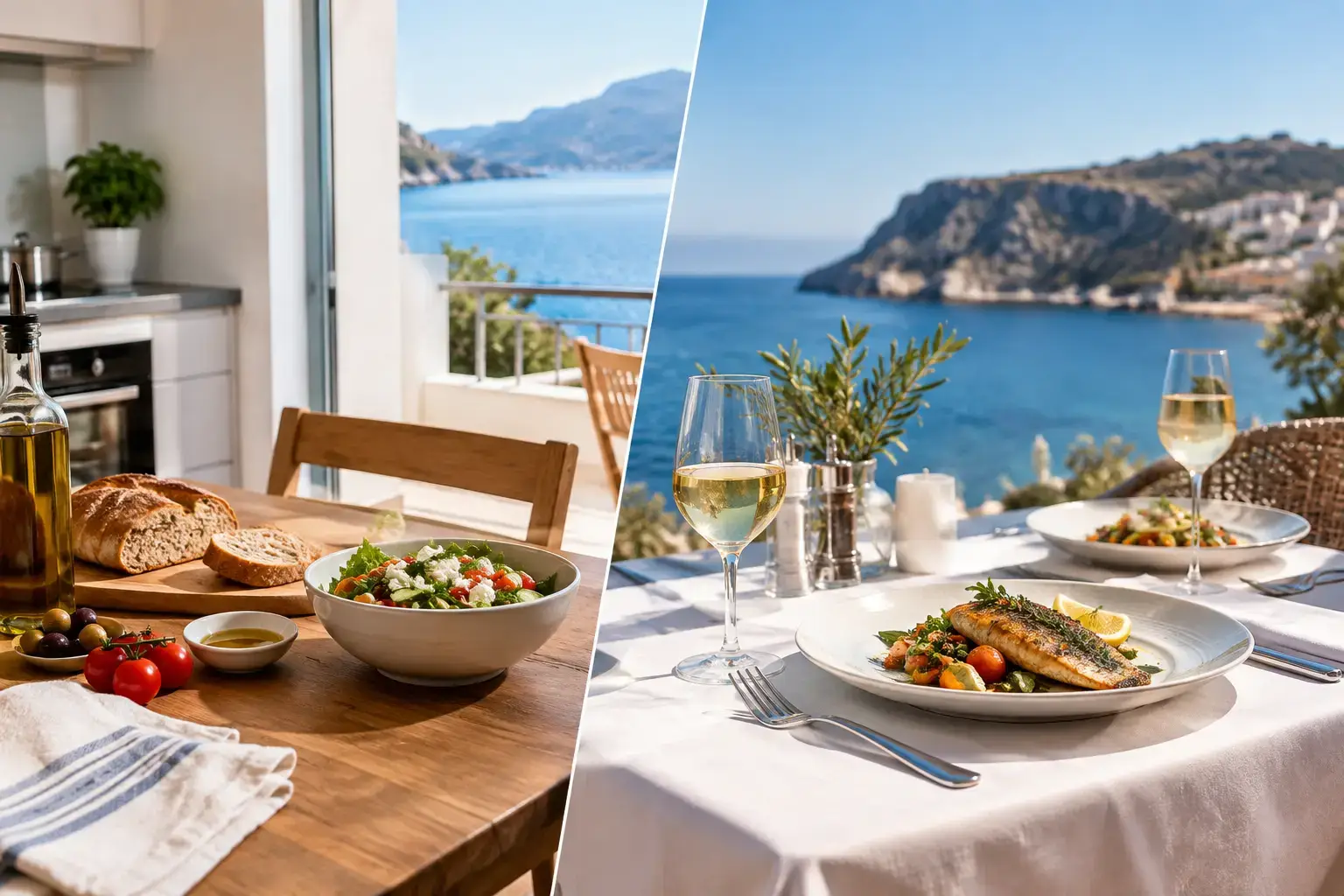
The choice between self catering vs hotel dining often shapes a vacation more than travelers expect. It determines whether mornings begin at a private table overlooking the sea, whether lunch follows the rhythm of the beach, and whether dinner feels planned, spontaneous, or entirely your own. In Crete, where market produce, family-run bakeries, and long, sunlit evenings invite lingering, the answer is rarely one or the other.
For guests seeking a refined coastal escape, the most rewarding stay often leaves room for both independence and occasion. A beautifully equipped villa kitchen offers freedom. A private chef or a memorable local dinner adds ease, theater, and a taste of the island at its most generous.
What Self-Catering Brings to a Luxury Stay
Self-catering is not about giving up service. At its best, it is the quiet luxury of choice.
You can wake when you wish, make coffee slowly, and bring breakfast out to the terrace while the water is still calm. Fresh fruit, yogurt with Cretan honey, warm bread, and eggs prepared exactly as you like can feel more restorative than a crowded breakfast room with fixed hours and a familiar buffet.
For families and small groups, this flexibility becomes especially valuable. Different appetites and schedules do not need to be negotiated around a restaurant reservation. One guest may want an early swim and a light breakfast; another may prefer a late morning and a leisurely brunch. A villa allows both.
A full kitchen also makes the local market part of the experience. In Kalyves, simple ingredients can become the centerpiece of an unhurried meal: ripe tomatoes, local cheese, fragrant olive oil, herbs, fish from the day’s catch, and a bottle chosen for the evening ahead. Cooking need not become a chore. It can be a gentle ritual between beach hours and sunset.
There is a practical dimension, too. Keeping chilled drinks, favorite snacks, and easy lunch ingredients on hand makes pool days effortless. For travelers with dietary preferences, young children, or a preference for eating well without following a timetable, self-catering provides a level of comfort a hotel room rarely can.
Where Hotel Dining Still Has Its Place
Hotel dining offers a different kind of luxury: the pleasure of being looked after without deciding what comes next.
There are evenings when no one wants to shop, prep, clear plates, or consider a menu beyond choosing between grilled fish and a glass of Assyrtiko. After a day in the sun, a polished restaurant setting can feel wonderfully simple. The table is ready, the lighting is considered, and the evening has a natural beginning and end.
For couples, dining out can add a sense of occasion. A well-chosen restaurant turns dinner into an event, particularly on the first night of a trip or during a celebration. Hotels may also be convenient for travelers who want every element of their stay in one place, from breakfast to late-night cocktails.
Yet hotel dining has its limits. Meal periods are structured, menus are designed for many guests, and the atmosphere is shared. Even exceptional restaurants can feel less intimate than a dinner prepared at home with the doors open to the sea. For longer stays, relying solely on hotel meals may also begin to feel repetitive, especially when Crete’s food culture is best discovered beyond a single dining room.
Self Catering vs Hotel Dining: The Real Difference
The central difference is not simply cooking versus being served. It is control versus structure, privacy versus sociability, and everyday authenticity versus polished convenience.
Self-catering suits travelers who see their accommodation as part of the destination. They want a place where an afternoon snack can become a late lunch, where the children can sleep while adults share wine by the pool, and where a favorite meal can be recreated after a visit to the village market. The villa is not just where they return after the day. It is where the day unfolds.
Hotel dining suits guests who prefer a clear separation between staying and eating. They may value a staffed dining room, a broad wine list, and the ease of leaving every detail to someone else. This can be particularly appealing on a short break, when every hour feels precious and the goal is complete release from routine.
Neither approach is inherently more luxurious. Luxury is having the setting and service that match your mood. Some days call for grilled vegetables, bread, and chilled rosé at home. Others deserve a table reserved in advance, a chef’s recommendation, and nowhere else to be.
The Best Option for Families and Groups
For a group of up to six guests, self-catering typically offers more space, more flexibility, and a gentler pace. Restaurant dining with several people can be joyful, but it also requires alignment: reservations, transport, timing, and a menu that works for everyone.
A private residence changes the equation. Children can eat earlier without ending the evening for the adults. A couple can enjoy a quiet breakfast before the rest of the group wakes. Friends can gather around the kitchen island, share a simple supper, and move naturally from dinner to the pool terrace without checking a closing time.
The financial side deserves consideration as well. Dining out for every meal can add up quickly, particularly for families. Self-catering does not mean every meal must be prepared from scratch. A balanced approach might include market breakfasts, simple lunches at the villa, a few local tavern dinners, and one special chef-led evening. It feels generous without becoming overplanned.
Make the Kitchen Part of the Cretan Experience
The most memorable self-catered meals are often the least complicated. Crete rewards restraint: excellent olive oil, sea salt, citrus, garden herbs, creamy feta, and ingredients allowed to speak for themselves.
Start with a visit to a local market and choose what looks beautiful rather than arriving with an ambitious recipe. Tomatoes and cucumbers can become a bright salad. Fresh bread, olives, and cheese make an elegant lunch. Fish can be grilled simply with lemon and herbs. A local recipe book can offer inspiration without turning the kitchen into a project.
This approach also creates the kind of small vacation memories that cannot be booked in advance: the scent of coffee in the morning, a bowl of cherries on the counter, music playing while someone slices peaches, dinner served just as the sky softens over the water.
At Kaliva Residence, the fully equipped kitchen is designed for precisely this ease. It supports the practical moments of a stay while making space for pleasure, from a quiet breakfast to a shared dinner after a day by the sea.
Add a Chef When You Want the Evening to Feel Effortless
Private chef service is the elegant middle ground between self-catering and hotel dining. You retain the privacy, views, and unhurried atmosphere of a villa, while someone else handles the culinary work.
It is ideal for an arrival-night dinner, a birthday, a family gathering, or simply an evening when you want to refresh, recharge, and remain exactly where you are. A chef can shape a menu around preferences, dietary needs, and the flavors of the season. The meal feels personal in a way that a standard hotel menu rarely can.
There is also no need to choose between a formal multi-course experience and something relaxed. A chef can create a refined sunset dinner, a casual seafood feast, or a lingering Cretan table designed for sharing. The best choice depends on the mood of the group, not a dress code or restaurant schedule.
A Simple Way to Plan Your Meals
Before deciding, consider the length and purpose of your stay. A two-night escape may favor more meals out, especially if you want to explore widely. A week by the coast benefits from a kitchen, because it gives the trip breathing room.
Think about how you travel at home, too. If cooking together is part of your family life, a villa kitchen will feel natural rather than burdensome. If the greatest pleasure of vacation is not making a single decision about dinner, plan several restaurant meals or arrange chef service early in the stay.
Most importantly, avoid turning food into an itinerary. Leave a few evenings open. The best dinner may be the one you decide on after a late swim, when the market tomatoes are still perfect, the wine is already chilled, and the terrace is too beautiful to leave.