

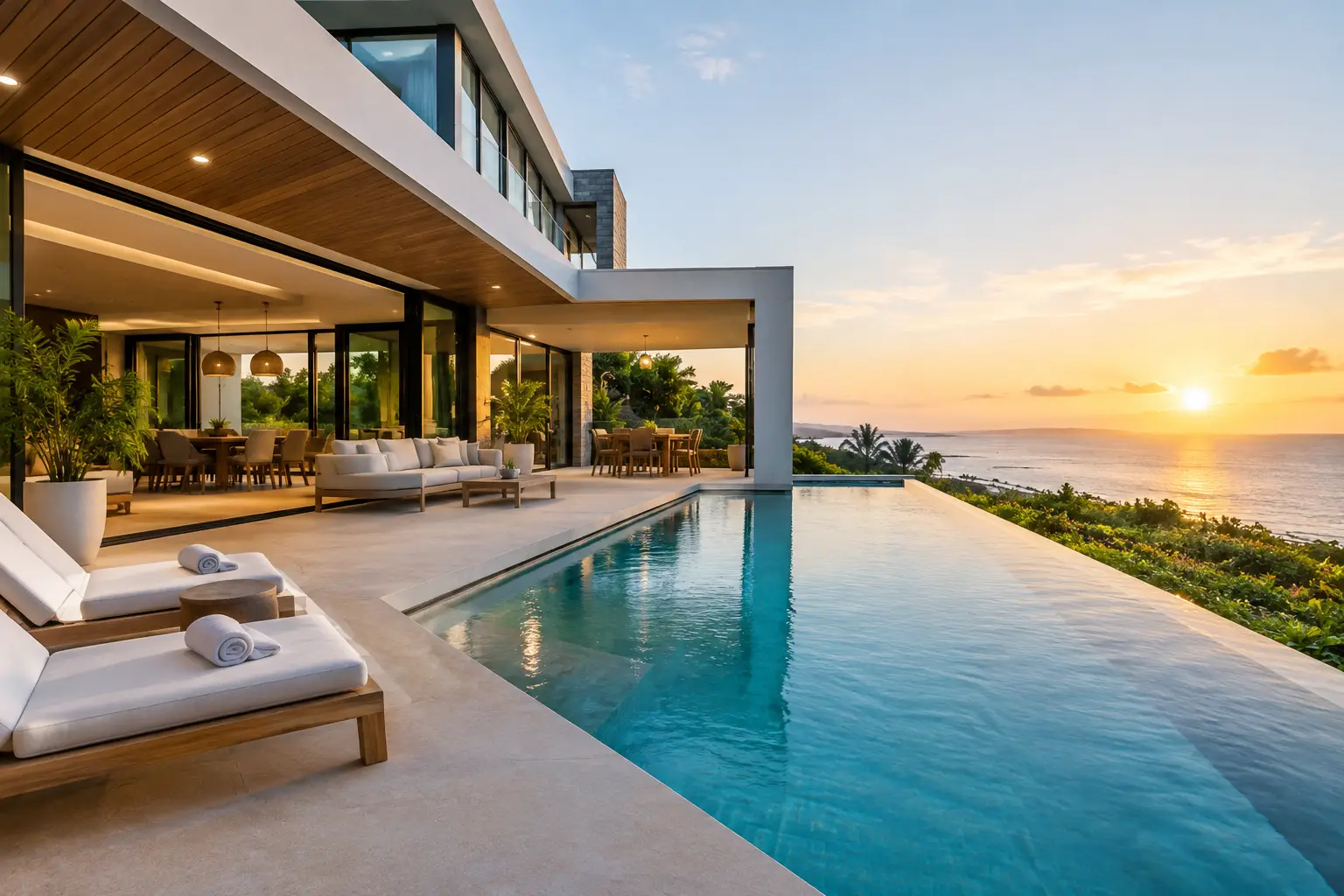
A meaningful villa architecture review begins before the first swim or sunset dinner. It begins with the feeling of arriving somewhere that asks very little of you. The entrance is calm. The horizon is visible. Rooms feel intuitively placed. Nothing competes with the sea, the sky, or the slower rhythm that brought you to Crete.
For a luxury stay, architecture is not simply a matter of square footage or attractive finishes. It shapes how a group wakes, gathers, rests, and finds privacy. The best villas make this feel effortless, balancing open Mediterranean living with the quiet comforts that make a home feel personal.
What a Villa Architecture Review Should Consider
A well-designed coastal villa is experienced in sequences rather than individual rooms. The approach, the first view, the movement from interior to terrace, and the relationship between pool and living spaces all matter. A beautiful bedroom is valuable, but its impact changes when it opens to soft morning light, a private outdoor corner, or an uninterrupted view of the water.
For guests traveling as couples, families, or a small private group, the central question is simple: does the house allow everyone to be together without requiring everyone to do the same thing? Architecture answers that question through circulation, sightlines, sound control, and the placement of private spaces.
At its best, a villa creates options. One guest can read in the shade while another swims. A family can prepare lunch in the kitchen while the terrace remains part of the conversation. Someone can retreat for a quiet afternoon without feeling removed from the shared atmosphere of the house.
Light That Changes the Day
Natural light is one of the most defining elements in a Mediterranean villa. It should illuminate the home without making it feel exposed or overheated. Large openings toward the sea can frame the landscape beautifully, but orientation, shading, and window treatments determine whether that view remains enjoyable from breakfast through late afternoon.
The strongest designs use light with restraint. Morning sun may belong in the kitchen and bedrooms, while sheltered living areas offer relief during the brightest hours. In the evening, warm interior lighting should support the atmosphere rather than overpower it. The goal is not a house that photographs well for one hour. It is a house that feels composed all day.
Privacy Without Isolation
Privacy is often described as a luxury feature, yet it is fundamentally an architectural decision. A villa can be close to a village, beach, and local life while still providing a protected sense of retreat. Landscape, walls, terraces, and the angle of openings all contribute to this feeling.
Inside, bedroom placement deserves close attention. Three bedrooms and three bathrooms, for example, offer real comfort when each room has enough separation for guests to keep their own schedule. Early risers should not disturb late sleepers. Families should have practical access to shared spaces. Couples traveling together should not feel as though one room is clearly an afterthought.
Complete separation is not always the answer. A villa designed for connection should still make it easy to meet in the kitchen, settle into the living area, or step outside for a final drink beneath the stars. The balance is subtle: private when desired, connected when it matters.
Indoor-Outdoor Flow Is the Real Measure of Space
In Crete, the most memorable square footage is often outside. A terrace can become a dining room, a poolside lounge can become an afternoon retreat, and an open doorway can make the sea feel present even while preparing coffee indoors. This is why a villa architecture review should look beyond the floor plan.
The transition from inside to outside should be natural. Doors should open generously, but furniture layout and shade are equally important. If reaching the terrace requires crossing an awkward passage or moving through a formal room, guests may use it less than expected. If the dining table is too far from the kitchen, a relaxed meal becomes unnecessarily complicated.
A thoughtful layout keeps the essentials close: kitchen, dining space, pool, outdoor seating, and the view. It also allows for varied moments. Full sun has its place, especially beside the water, but a shaded area is what makes long lunches and unhurried reading possible.
There are trade-offs. Expansive glazing can create spectacular views, yet it may require careful climate control and screening. An infinity-edge pool can appear to merge with the horizon, yet families may prioritize safer shallow areas or easier access. Good architecture does not chase one idea of luxury. It responds to how guests will actually live in the space.
The Pool as Part of the House
A pool should feel integrated, not added as an afterthought. Its position affects nearly every shared moment of the stay. When it sits within view of the living area and terrace, it becomes part of the villa’s daily rhythm. When it is tucked too far away, it can divide the group into separate zones.
The setting also matters. A sea-facing pool offers a powerful visual connection to the coast, particularly at sunset. Yet comfort comes from the details around it: a place to set down a book, room for loungers without crowding, a nearby shower, and enough shade to stay outside longer than an hour.
At Kaliva Residence, the pool is part of a wider composition of sea views, modern interiors, and private outdoor living. This is the difference between an amenity and an experience. The water is not simply there to be used. It gives the entire home a quieter pace.
Material Choices Should Feel Calm, Not Cold
Contemporary villa design can sometimes lean too far toward the gallery-like: hard surfaces, dramatic forms, and rooms that feel impressive but not inviting. For a vacation home, refinement needs warmth. Natural textures, tactile fabrics, timber, stone, and softened neutral tones can create a setting that feels polished without becoming precious.
Materials also need to suit their climate. Near the coast, salt air, strong sun, and occasional wind ask more of exterior finishes than a city apartment would. Durable surfaces are practical, but they should age gracefully. A villa should still feel elegant after a sun-filled season, not require guests to tread carefully around every detail.
The same principle applies to furnishings. Low, comfortable seating may suit a panoramic view better than formal pieces that interrupt it. A dining table should invite a lingering meal. Bedrooms should feel quiet and uncluttered, with practical storage that lets guests unpack rather than live out of suitcases.
Wellness Needs a Place in the Plan
Wellness amenities are most effective when they are woven into the architecture rather than presented as a separate checklist. A yoga session is more restorative when there is a calm terrace, filtered light, and room to move. Fitness equipment is more likely to be used when it is easy to access and does not take over the living space.
This is especially relevant for travelers who want a reset without a rigid schedule. The appeal of a private villa lies in choosing the pace: a morning workout, a swim before breakfast, an in-villa treatment, or no plan at all. Thoughtful design leaves room for each version of the day.
Convenience Protects the Sense of Escape
Architectural beauty alone cannot compensate for a difficult stay. A luxury villa should make practical life disappear into the background. That means a kitchen equipped for a proper meal, bathrooms with generous storage and good water pressure, comfortable climate control, and spaces that work for wet swimsuits, beach bags, and groceries from the local market.
Proximity also changes the experience. A secluded setting can be deeply peaceful, but it may mean a long drive for bread, dinner, or a spontaneous walk by the water. For many guests, the ideal arrangement is privacy with the village close enough to enjoy. It supports independence while keeping the stay connected to the character of the destination.
A villa near the beach offers another kind of luxury: the freedom to visit the sea without organizing the day around it. A short walk can turn a quick swim into a daily ritual. That ease is often more valuable than a feature that looks impressive on a listing but rarely enters the rhythm of the stay.
The most rewarding villas are not those that demand attention at every turn. They are the ones that let architecture fade gently into the background, leaving space for sea air, shared meals, deep rest, and the simple pleasure of feeling exactly where you want to be.